 Save
Save I discovered hummus not in a cookbook but at a small market in Beirut, watching a vendor blend chickpeas with such casual precision that I realized this wasn't complicated cooking—it was patient cooking. The moment the food processor stopped and he tasted it, adjusting with a squeeze of lemon and a pinch of salt, something clicked. Years later, I make this silky spread at home and it brings back that market smell: garlic, tahini, and the particular warmth of fresh lemon hitting warm chickpeas.
The first time I served this at a dinner party, I was nervous about something so simple. But watching friends dip warm pita into the center swirl, pulling it up with oil pooling underneath, I understood why hummus appears on every Levantine table. It's not about complexity—it's about doing one thing so well that people keep coming back for more.
Ingredients
- Chickpeas: Use canned and rinsed, or cook dried ones if you have time; they carry the whole dish, so don't skip the rinsing step.
- Tahini: Buy the best paste you can find—the sesame flavor here matters more than anywhere else.
- Lemon juice: Freshly squeezed, never bottled; it's what keeps hummus from tasting flat and dull.
- Garlic: One small clove, minced fine; too much and you'll overpower the delicate tahini.
- Cold water: This is your adjustment tool for texture; add it slowly until you reach that cloud-like consistency.
- Ground cumin: A whisper of warmth that makes people wonder what the secret spice is.
- Sea salt: Fine sea salt dissolves better than kosher, so it blends evenly throughout.
- Extra virgin olive oil: This is your finishing touch and shouldn't be skipped or substituted.
- Paprika or sumac: Sumac adds brightness; paprika adds warmth—choose based on your mood.
- Fresh parsley: Chopped just before serving so it stays vibrant and alive on the plate.
Tired of Takeout? 🥡
Get 10 meals you can make faster than delivery arrives. Seriously.
One email. No spam. Unsubscribe anytime.
Instructions
- Gather everything first:
- Before you touch the food processor, have all ingredients measured and ready. This takes two minutes and prevents the frustration of hunting for something mid-blend.
- Combine and pulse:
- Add chickpeas, tahini, lemon juice, garlic, water, cumin, and salt to your food processor. Pulse once or twice, then let it run—you're breaking everything down, not making a quick sauce.
- Blend to silk:
- Process for three to five minutes, stopping every minute to scrape down the sides with a spatula. You'll feel the moment it shifts from chunky to creamy; keep going just past that point until it's almost fluffy.
- Test and adjust:
- Taste a small spoon. If it's too thick, add water one tablespoon at a time and blend again. If it needs brightness, add a squeeze more lemon; if it needs depth, a tiny pinch more salt.
- Transfer with care:
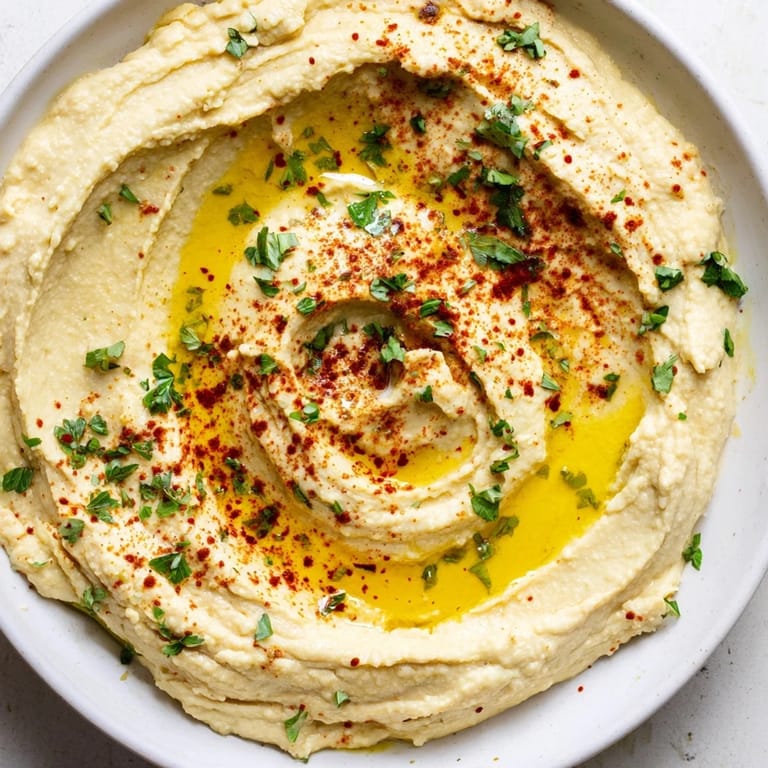
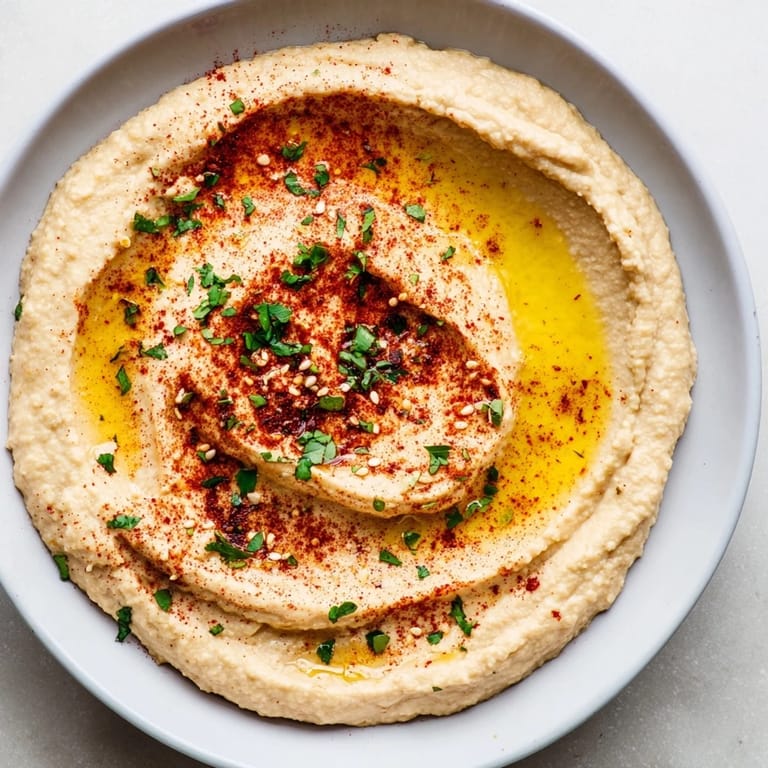
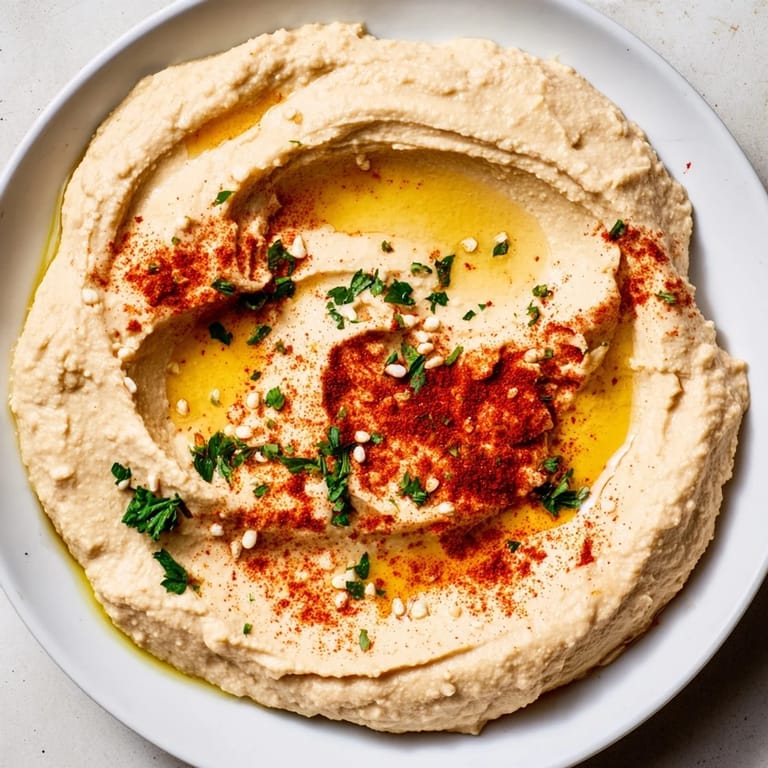
- Pour the hummus into a shallow serving dish. Using the back of a spoon, make a gentle swirl or well in the center—this isn't just for looks; it's where the oil will pool.
- Dress it up:
- Drizzle olive oil generously into that center well, letting it spread across the surface. Dust with paprika or sumac, scatter parsley over top, and serve immediately while the hummus is still at its creamiest.
 Save
Save There's a moment when hummus stops being an ingredient and becomes a reason to gather. I've seen it happen at tables where nothing else is fancy, where the warmth of conversation matters more than the food, yet this simple spread ties everything together.
The Tahini Truth
Tahini is temperamental but forgiving once you understand it. The paste wants to stay thick, to resist blending, which is why patience and water are your tools. Some people fear tahini will make hummus bitter, but that bitterness comes from buying poor quality or old stock. Spend the extra dollar on fresh tahini from a store with turnover, and you'll taste the difference immediately—it should smell like toasted nuts, never rancid or stale.
Variations Worth Knowing
Once you master the basic hummus, the variations reveal themselves naturally. Add roasted red peppers for sweetness, a pinch of cayenne for heat, or roasted garlic if you want something deeper and less sharp. Some days I make it with roasted chickpeas on top; other days I skip the paprika and use fresh herbs instead. The formula stays the same—it's just your mood changing the outcome.
Storage and Serving
Hummus keeps beautifully for four days in an airtight container, and the flavor actually improves slightly as everything settles together. Before serving leftovers, let it come to room temperature and refresh with a drizzle of olive oil—it wakes up immediately. Serve with warm pita bread torn into scoops, or arrange fresh vegetables around the edge of the plate like you've invited them to dinner.
- Make hummus the morning of a gathering so it's fresh but fully rested.
- If it dries out slightly in the fridge, add a tablespoon of water and re-blend for 30 seconds.
- Always taste before serving; salt and lemon juice are your final adjustments.
 Save
Save Hummus is proof that the simplest recipes often carry the deepest meaning. Make this once and you'll find yourself making it again and again, each time a little more confident, each time a little more your own.
Recipe Questions & Answers
- → What gives this spread its creamy texture?
The creamy texture comes from blending cooked chickpeas with tahini, lemon juice, and a touch of cold water until ultra-smooth.
- → How can the flavor be adjusted?
Taste and adjust by adding more lemon juice for brightness, salt for balance, or a pinch of cayenne for subtle heat.
- → What garnishes are used to enhance this dish?
Olive oil is drizzled on top along with a sprinkle of paprika or sumac and chopped fresh parsley for color and flavor.
- → Can this spread be served with other foods?
It pairs wonderfully with warm pita bread, fresh vegetable sticks, or as part of a mezze platter.
- → What tools are recommended for preparation?
A food processor or blender is best for achieving a silky, smooth consistency.
- → Is this spread suitable for special diets?
Yes, it’s naturally vegan, gluten-free, and dairy-free, but check tahini and chickpeas for possible cross-contamination if sensitive.