 Save
Save The first time I tasted merguez was at a neighborhood market stall on a humid afternoon, the vendor grilling sausages over open flames while smoke curled up into the street. I bit into one wrapped in warm flatbread, and the heat hit first—then the garlic, the cumin, the way the meat crackled between my teeth. I went back three times that week, and on the fourth visit, the vendor laughed and handed me his phone number scribbled on paper. It took me months of kitchen experiments to crack the formula, but when I finally nailed it, that same smoky, spiced intensity came alive in my own pan.
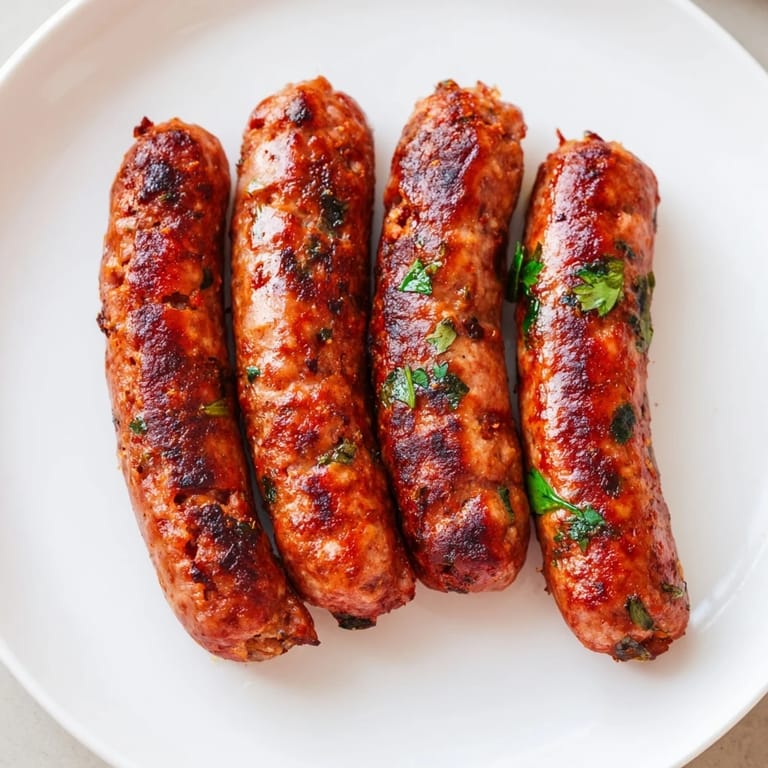
I made these for a dinner party last fall, and I remember standing at the stove, turning each sausage carefully, watching the harissa-spiced exterior bronze while my kitchen filled with that intoxicating smell of toasted cumin and chili. My neighbor wandered over because she smelled it from her porch, and by the time the sausages came off the grill, there were suddenly five extra people ready to eat. Nobody asked what was in them—they just reached for seconds and thirds, and the whole evening became about these little spiced logs that somehow made everyone feel like they were sitting somewhere much farther away.
Ingredients
- Ground beef and lamb (500 g total): Using a mix of beef and lamb gives you the authentic richness that pure beef or lamb alone can't quite capture; lean cuts work best so the fat content stays balanced.
- Harissa paste (2 tbsp): This is the soul of merguez—it brings both heat and a subtle fermented depth that store-bought spice blends miss.
- Cumin, coriander, and caraway (1 tbsp each): These three create the warm, slightly sweet base note that makes merguez taste like itself and nothing else.
- Smoked paprika (1 tsp): Adds color and a whisper of smokiness that rounds out the hotter spices beautifully.
- Fennel (1 tsp): This subtle anise note sneaks up on you and makes people wonder what the mysterious flavor is.
- Cayenne pepper (1 tsp): Start here and adjust—you can always add more heat but you can't take it back.
- Garlic, cilantro, and parsley: The fresh elements that keep these sausages from tasting one-dimensional or heavy.
- Sheep sausage casings (1.5 m): Natural casings give you that authentic snap when you bite into them, but they're optional if you prefer patties.
Tired of Takeout? 🥡
Get 10 meals you can make faster than delivery arrives. Seriously.
One email. No spam. Unsubscribe anytime.
Instructions
- Mix the meat foundation:
- Combine your beef and lamb in a large bowl—cold hands or a cold bowl helps the meat stay intact as you work. Don't be shy mixing this; you want the meats completely unified and tacky.
- Build the spice layer:
- Add your harissa, all the dry spices, garlic, salt, and pepper, and mix until you can't see any streaks of plain meat anymore. This is when your kitchen will smell like North Africa.
- Add brightness and bind:
- Stir in the cilantro and parsley, then sprinkle the cold water over top and mix until the mixture feels sticky and holds together when you squeeze it. This water is doing real work—it helps the spices distribute evenly and keeps the sausage moist as it cooks.
- Prepare your casings (if using):
- Rinse them gently under cool water and let them soak for ten minutes—they'll become pliable and easier to work with. Don't rush this step or they'll tear.
- Stuff or shape:
- If using a stuffer or piping bag, fill the casings slowly and twist into 5-6 inch links; if going casing-free, shape into logs and refrigerate for thirty minutes to help them hold their form. Patience here pays off when they don't fall apart on the grill.
- Grill until alive:
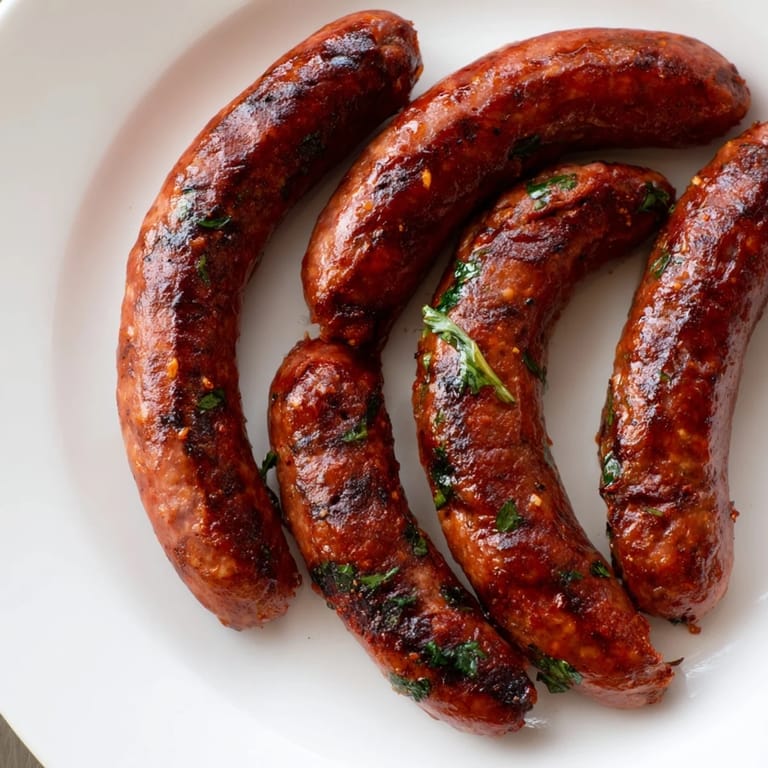
- Heat your grill to medium-high, then cook the sausages 8-10 minutes total, turning every couple of minutes until they're mahogany brown all over and cooked through. You'll feel them firm up as they cook—that's when you know they're ready.
- Rest and serve:
- Give them two minutes off the heat before serving so the juices settle, then serve on warm flatbread or alongside whatever you're in the mood for.
 Save
Save I'll never forget the moment my friend—the one who grew up in Tunis—tried these and got quiet for a second, then nodded and smiled. That nod meant more to me than any compliment, because it meant the spices landed right, that I'd captured something real and not just made a decent sausage. Now these are what people ask me to bring to potlucks, and there's something good about feeding people food that connects them to a place, a memory, or something they didn't know they were missing.
Why the Spice Blend Works
Merguez isn't just about heat—if it were, you'd just use cayenne and call it done. The real magic happens when you layer warm spices (cumin, coriander, fennel, caraway) underneath the sharp heat of harissa and cayenne, so your mouth experiences a landscape instead of just a one-note burn. The smoked paprika ties everything together and gives the sausage a color that makes it look as good as it tastes. Trust this balance even if it seems like a lot of spices; each one earns its place, and they become singular once they're cooked into the meat.
Casing vs. Casing-Free
Casings give you that traditional snappy exterior that people expect from a real sausage, and there's something satisfying about that bite. But casings also require finesse—they tear, they slip off the stuffer, and not everyone has a stuffer at home. The good news is that the mixture is flavorful enough to stand on its own as a patty or unskinned sausage (kefta style); you'll lose that textural contrast, but you gain simplicity and reliability. Either way, you're eating something delicious, so choose based on your comfort level, not guilt.
Serving and Pairing
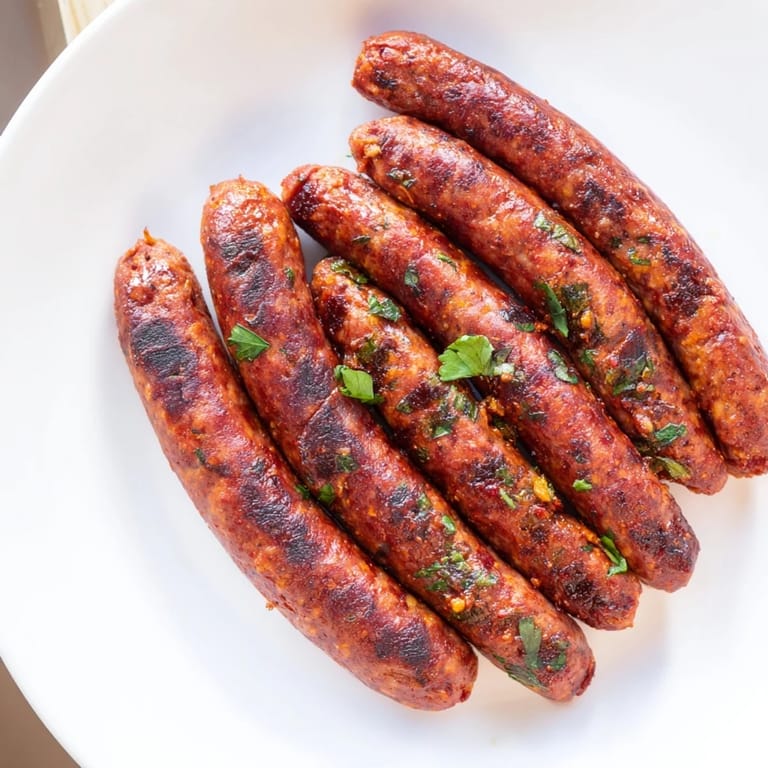
Merguez is humble enough to shine on its own but generous enough to play well with almost anything. Warm flatbread or a crusty baguette is the simplest route, but I've also nestled them into grain bowls with couscous, labneh, and roasted vegetables, or laid them over a big green salad with lemon dressing to cut through the richness. The spices pair beautifully with cooling elements—yogurt sauce, fresh herbs, acidic vegetables—so don't feel locked into one serving style.
- Serve with a minty yogurt sauce, roasted beets, and fresh herbs for a lighter meal.
- Layer into warm pita with pickled vegetables and harissa mayo for a proper sandwich experience.
- Crumble cooked merguez over couscous or rice with braised chickpeas and roasted squash for a complete dinner.
 Save
Save These sausages won't stay on the platter long once people try them. Make them often enough and they become your signature—the thing you're known for bringing, the recipe people text you asking for.
Recipe Questions & Answers
- → What meats are used in this sausage?
It combines ground beef and lamb for a rich, balanced flavor typical of North African cuisine.
- → How can I adjust the spice level?
Modify the amount of cayenne pepper or harissa paste to increase or reduce the heat according to your taste.
- → Can I make these sausages without casings?
Yes, the mixture can be shaped into patties or skinless logs if casings are not available.
- → What cooking method is recommended?
Grilling over medium-high heat until browned and cooked through is ideal for the best texture and flavor.
- → What dishes pair well with this sausage?
Serve with flatbread, couscous, fresh salads, or as part of mezze platters to complement the spices.
- → Are there any allergen concerns?
Generally allergen-free, but always check commercial spice blends and casings for gluten or preservatives if sensitive.